The best historic structures bring their age gently. A Georgian townhouse with block that flushes at sundown, a shingle-style coastal villa that sings when the wind occurs the cliff, a sedimentary rock chateau whose smokeshafts attract the eye prior to the door does. On these roofing systems, every silhouette matters. Which is why a personalized cupola, appropriately created and properly made, does greater than vent the attic room or crown a ridge. It recovers intent. It completes the make-up. It informs the structure's tale from the highest possible line.
Designing and making customized cupolas for period properties is equal components scholarship and craft. You begin with drawings, pictures, and hints in the eaves. You finish with a sky-borne things that feels unavoidable, as if it has always been there. The distinction in between virtually ideal and excellent lives in a loads choices: the pitch of the rooflet, the disclose of the cornice, the soft qualities of a span, the means the aging will walk down the steel in five wintertimes. That is where knowledgeable hands matter.
What a cupola really does, past ornament
Ventilation comes up initially, and it should. A cupola can help pull warm, damp air out of a roof setting up if the apertures and baffles are sized properly. But on a duration home the cupola's key work is visual framework. It centers the roofing system. It brings upright energy to long, low planes. On carriage houses and barns, it makes use of louvers, lanterns, or glazed lights to punctuate the perspective. On seaside homes, it comes to be a belvedere, a little area that steals views.
In technique, a customized cupola does 4 tasks simultaneously. It aerates discreetly, withstands weather condition with grace, deals with scale truthfully, and brings material language up from the body of the building. Overlook any kind of one of those and the roofline looks off, also to an inexperienced eye. Rain gutters can be flexible; cupolas are not.
Reading a duration roofline before you attract a line
Before I illustration, I walk the site with a note pad and a set of field glasses. You learn more from the ground than you do at the drafting table. I gauge the sightlines from the strategy and from the garden side. I count training courses of slate and note their widths, because slate sizing telegraphs duration and region. I take a look at the bed molding under the cornice to verify the account household. Then I stand at the ridge and take a look at the wind. On revealed sites, the cupola's joints and cap geometry issue as long as the beauty.
Two stories repeat themselves. On a 1920s gambrel in Marblehead, we found the ghost of a former lantern in the roofing framing, cut back when asphalt shingles changed bespoke copper finials cedar. The mounting told us the original width down to a half inch. We placed a copper-sheathed, louvered cupola back where it belonged, scaled to the old mark. On a Federal-era brick house outside Philly, there was no evidence in any way, however the smokeshafts and dormers spoke plainly. High heaps with shaped caps, low sloping dormers with delicate cheek trim. That language led us to a slender, octagonal light, painted a conventional beige with a lead-coated copper roof, just 5 feet throughout on a 46-foot ridge. Understated, aligned with the chimneys rather than competing with them.
Proportion: the quiet legislation you neglect at your peril
Design solutions exist for cupola sizing. The people knowledge claims roughly one inch of cupola width per foot of structure size, or a cupola base at 1/10 to 1/12 of the ridge size. These are useful starting numbers, particularly on barns. Period houses request for more sensitivity. Extremely pitched roof coverings press the perceived width. Deep entablatures make cupolas really feel shorter than they are. Dormers can crowd or tower over a cupola if the rhythm breaks.
I keep 3 examinations in mind. Initially, from 60 feet, does the cupola checked out as a solitary, meaningful mass rather than a pile of components. Second, does the louver or light percentage resemble the local home window's muntin rhythm. Third, does the cornice account align, in section, with what the main cornice does, also if the scale lowers. When those web link, the cupola seems like an all-natural extension of the architecture. When they do not, it feels store-bought, also if it is not.
Materials that age well, not simply look great on setup day
Cupolas live tough lives. They being in UV, take wind on the chin, and dropped water in every season. A duration residential or commercial property is entitled to materials that thrive in that role. You can construct cupolas in painted cedar, https://salvometalworks.com/why-choose-us/ mahogany, or high-density urethane. You can sheath them in copper, zinc, or lead-coated copper. You can glaze them in remediation glass or laminated security glass that resembles it.
Copper remains the criteria for revealed metal due to the fact that it informs a beautiful time tale. In six months it browns, in 2 to five years it environment-friendlies depending on direct exposure, air quality, and runoff chemistry. Lead-coated copper supplies a quieter, pewter-like aging that fits Federal and Georgian homes, where flash is unwanted. Zinc is a choice for cool, continental combinations, with a velvety grey that sits pleasantly close to sedimentary rock and slate. Repainted wood, when crushed appropriately and back-primed, can last 3 decades in between major treatments if the roof cap keeps water moving. I have actually drawn 40-year-old cedar louvers off a Maine carriage home where just the south face asked for attention.
Some customers desire maintenance-free. There is no such point on a roofing system, yet there are clever concessions. High-density urethane for the entablature and pilasters, with copper for the cap and flashing, can hold shape and finish through cycles that would certainly emphasize wood. The method is to keep the touch points, the locations the eye reviews carefully, in typical material. A repainted urethane frieze looks great 40 feet up. A plastic louver does not.
Ventilation that respects the envelope
A cupola that moves air well and does not welcome water is a tiny engineering project. On barns and unconditioned attics, generous louvers, insect screens, and a clear pile path do the job. On conditioned attics and roof coverings with spray foam, points obtain more facility. You may need passive vents only for aesthetic integrity, without active air flow. Or you may separate the cupola's air vent path from the conditioned assembly, utilizing baffles and secured visuals so the structure does not take a breath where it ought to not.
We size louver cost-free location to the attic room's intake capability, not some arbitrary target. If the soffits supply 200 square inches of net free area, the cupola's louvers need to match within 10 to 20 percent so the system equilibriums, assuming a ridge or gable vent is not in play. Sloped baffles inside the cupola, often in marine-grade plywood or metal, lost windblown rainfall away from the visual. In hurricane zones, I favor deeper return folds in the louver blades and weep courses that let water escape without saturating the visual framing. You feel the difference on a January evening when the wind whistles throughout a frozen meadow and the attic stays completely dry and quiet.
Profiles, cornices, and the language of the house
The joy of period job remains in the profiles. On a Greek Resurgence, the cupola's entablature desires a solid architrave, a shadow-casting frieze, and a controlled crown. On a Queen Anne, you can allow the crown run a little, allow the braces sing, and choose a finial that responds to the spirelets listed below. A Colonial Rebirth home built with the belt-and-suspenders restraint of the 1910s requests crisp, fine moldings and no bravura.
I maintain a collection of knives, literal steel accounts that match historical moldings. In some cases a cupola forces you to design a slight decrease of a residence profile, since 1:1 range looks hefty at the roofline. The test remains in the shadow. On a bright day, the entablature must sign up as three distinctive, clear bands when seen from the ground. If it checks out as mush, the accounts require developing or the reveals demand widening. Practical detail sustains charm. We frequently elevate the cap blinking an extra quarter inch to strengthen the darkness at the cornice without changing the molding itself.
Glazing and lanterns without glare
Glazed light cupolas are gorgeous, and they can be crippling if you obtain the light incorrect. Duration residences live with warm shade temperatures and soft comparison. Swap in a brilliant, awesome LED strip and the lantern glares like a storefront. I like little, protected fixtures inside the light, 2200 to 2700 Kelvin, dimmable, with lamping hidden over a simple baffle. This way the lantern checks out as a gentle, even radiance that does not compete with candlelight at the home windows below.
Glass wants believed as well. True restoration glass, with small waviness, is sublime at the roofline due to the fact that it animates the skies. Laminated glass can be defined with a refined distortion layer that evokes it without presenting safety and security danger. In snow country, shielded glazing and careful thermal breaks prevent condensation that would certainly rot muntins. Equipment must disappear. Marine-grade bronze joints and stays, repainted to match, offer life span that cheap iron cannot.
Integrating the remainder of the roof ensemble
Cupolas rarely online alone. Historic roof coverings carry a family members of components, and consistency issues. Customized Finials, as an example, should speak with the cupola's cap. A copper acorn finial, 24 to 36 inches high on a 12-foot-high light, really feels deliberate when the base resemble matches the cupola's ovolo. If you make use of a spearhead, keep it under the sightline of the closest smokeshaft pot or it will boss the roof.
Custom Dormers need comparable politeness. Dormer cheek accounts and sill details commonly offer you the thickness and expose that will certainly look exactly on cupola pilasters. If dormers are low and vast, a cupola that shoots also tall will look top-heavy. I often step a cupola down the ridge a foot or 2 to discover balance with an unbalanced dormer run. To the eye it reviews as centered on the structure, not the ridge measurement.
Ventilation hardware has its very own discussion. Customized Roofing system Vents on secondary slopes can pick up the cupola's louver blade spacing so everything really feels of an item. Customized Snow Guards, specifically on standing seam or slate roofing systems, should be set out with the same rigor as muntins. I favor low, repeating snow guards in bronze or stainless, patinated, straightening their horizontals with the cupola's louver rails. It seems picky, but from the yard the roof checks out as one instrument.
Functional information can be elevated to ornament in the right hands. Personalized Leader Boxes, usually called conductor heads, rest beneath the eaves accumulating water before it runs down. When your house calls for it, I lift an information from the cupola's entablature and repeat it on the leader box. A refined grain or a superficial cyma reversa can make the whole drain system feel bespoke. Close By, Custom-made Chimney Shrouds that suit the cupola's steel and patina maintain wind-blown rainfall out of flues without visual discord.
Metalwork that earns its keep
At the heart of a fantastic cupola is the metalwork you hardly see, the solder joints, the hemmed sides, the method the cap folds up let water race off without a second thought. Shops that survive on roof coverings leave no raw cut revealed. Every side is hemmed or folded to maintain capillarity in check. Every solder joint is bright and tidy, then acid-neutralized and rinsed so the patina forms even. You can inform that made the item by running a finger along the edge. If it is buttery and secure, it was made by somebody who cares.
For clients who desire uniformity across the roof covering, a single fabricator for all roof metals is a peaceful deluxe. Companies like Salvo Metal Works treat the ensemble as one payment. The cupola cap, the smokeshaft shadows, the leader boxes, the finials, the snow guards, all come out of the same steel supply so they mature with each other. That is not fussy. That is how you quit the roof from appearing like a patchwork in five years. I have actually seen copper from different mills patinate at different rates, one section going delicious chocolate while its neighbor remains pink. When the source matches, the roofing system seasons like a leather chair.
Anchoring, aesthetics, and what happens when the wind howls
A cupola is a sail. On a 90-mile-per-hour gust front, uplift forces on a modest 4-by-4 base can climb into the countless pounds. If you anchor a cupola by wishful thinking, it will certainly move. If you slow through an effectively blinked curb into structural framework, it enters into the house. I define aesthetics in pressure-treated lumber or, on level spots of low-slope roof coverings, in welded aluminum with thermal breaks and timber barring. Stainless screws or screws run through the visual right into increased rafters or a mounted platform, never ever just sheathing.
Flashing is choreography. Step flash the uphill side into the tiles or slate, wrap the visual in peel-and-stick as an additional measure, and then cap with pre-formed copper or lead-coated copper frying pans. On slate, I will frequently reduce full-width slates to produce tidy flashing lanes so you do not wind up with a patchwork of fiddly cuts that invite leaks. It takes longer and saves years of headaches.
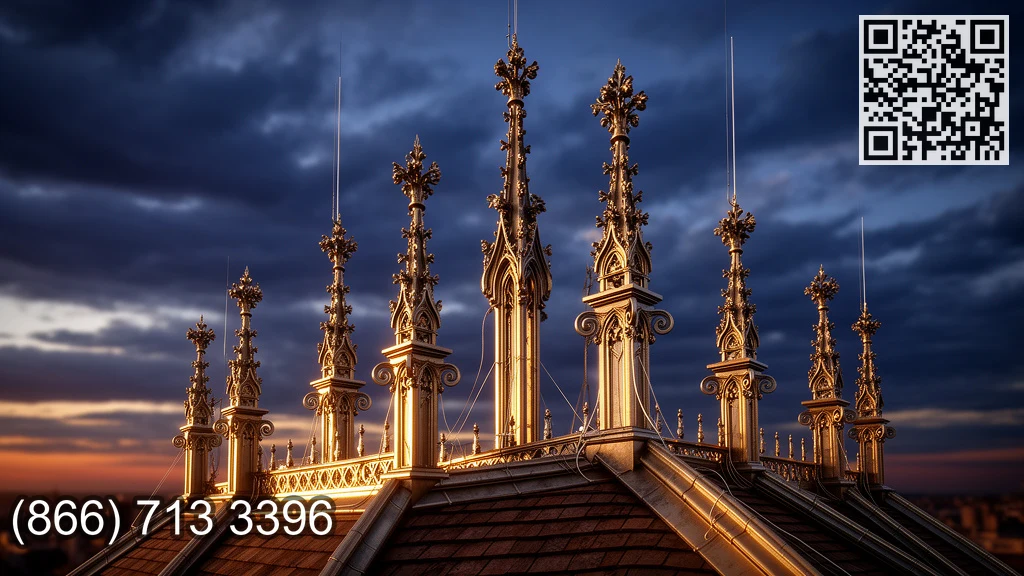
In snow nation, a baffle or cricket uphill of the cupola keeps snow from packaging. In environments where ice dams haunt eaves, I run a de-icing cable in a concealed chase to a discreet outlet near the cupola base, only if essential. Much better to deal with insulation and air sealing below, but duration houses sometimes give you the roof they offer you.
Patina, paint, and the clockwork of maintenance
Luxury does not imply no upkeep. It implies the maintenance is civilized, intended, and a satisfaction to take care of. Copper and lead-coated copper want to be left alone. Do not scrub aging. Do not lacquer. Let the roofing system write its poem. Paint wants a cycle. On wood cupolas in the Northeast, a 7 to ten-year exterior paint cycle maintains things fresh. South and west faces age quicker. Usage oil-primed, acrylic overcoats with high solids, and see to it every cut end is secured at the shop, not on the roof.
Louvers collect dust and plant pollen. A once-a-year rinse with a low-pressure hose from a lift, not a stress washing machine, maintains them breathing. Lightning defense should have a reference. A roofing system object that comes to a head over the ridge needs to tie to a lightning defense system where code and vigilance suggest it. Run the conductor elegantly, paint it out, and land it on a ground pole that does its silent work.
Where themes assist, and where they do not
It is appealing to select a magazine cupola, repaint it, and call it good. On some barns that works. On duration residences it seldom does. Design templates help for interior clearances, for air vent area, for fundamental ratios. Yet every site will certainly instruct you something brand-new. Sunlight angles, wind patterns, the way surrounding trees mount the sight, the means a smokeshaft throws a shadow at 4 p.m. in October. A custom-made cupola lets you tune to those points, not fight them.
There are additionally realities of spending plan and routine. A completely custom lantern in copper and mahogany can take eight to twelve weeks from approved illustrations to mount, and the price normally lands in the high four to reduced 5 figures for property job, rising with dimension and steel selection. Creative use semi-custom elements can bring that down, specifically when framework is basic and the skin is customized. The risk is incorrect economic climate. A cupola you change in 10 years due to the fact that it never fairly belonged expenses greater than the right one constructed once.
A quick field guide to era-appropriate cues
- Georgian and very early Federal roof coverings desire restriction: octagonal or square lanterns with slim muntins, lead-coated copper caps, and tall, slender proportions that accept chimneys. Greek Rebirth sustains bolder entablatures, bigger friezes, and square plans, typically with straightforward louvered faces instead of glass. Victorian and Queen Anne periods allow perky finials, multi-tiered lights, and richer braces. Keep the energy however anchor it with genuine steel and honest wood. Shingle Design plays wonderfully with battered bases, shingled cupola bodies, and bronze or copper accents that will salt-stain into poetry on seaside houses. Colonial Revival, specifically interwar, likes cleanliness and percentage more than accessory. Repainted wood with a crisp cornice and a small Custom Finial feels faithful.
Coordination with the remainder of the job team
Cupolas touch structure, waterproofing, electric, and often mechanical systems. The cleanest installs occur when the architect, GC, roofing contractor, and metal maker work from the very same plan. We attract the aesthetic and blinking as part of the roof covering set, not an afterthought. We size avenues for lights and, if needed, lightning defense. On slate or ceramic tile roofings, we series the set up so the cupola lands prior to the final programs, not after, to prevent forced cuts.
A skilled roofing contractor gains their cost here. On a recent slate replacement, our contractor pre-flashed the aesthetic in copper, laid the slate around it with cool, full courses, after that returned to establish the cupola with us so joints married cleanly. That hour of choreography saved a day of chasing after leaks 4 months later.
When a cupola is not the answer
Not every roof covering desires a crown. Short, busy rooflines with several gables and dormers can look fussy with a cupola included. Low-slope roof coverings on particular Artisan bungalows do far better with a ridge screen or none in all. Residences with dominant smokeshafts typically favor the quiet of open sky in between stacks. I have actually recommended clients to invest in Personalized Roofing system Vents disguised in ridge trim and in refined Custom Smokeshaft Shrouds as opposed to a cupola that would certainly contend. The objective is not to examine a box. It is to complete the composition.
The enjoyment of getting it right
There is a moment, late in the day, when scaffolding is gone and the light comes reduced and warm. The brand-new copper has actually not yet browned. The paint is still taut. From the grass you search for and the cupola sits where it should rest, tranquil, proportioned, unselfconscious. Your house suddenly looks completed, not refurbished, as if the masons and joiners from a century earlier had stepped back on a Friday and nodded.
That feeling is gained. It comes from illustrations that appreciate the building's language, from materials that do not fight the climate, from metalwork with straightforward hems and tidy solder, from small choices concerning light color and louver blade spacing that nobody will ever call but everybody will certainly really feel. It additionally comes from a disciplined sense of family members across the roofing. When the Customized Finials, the Customized Dormers, the Personalized Leader Boxes, the Custom Roofing System Vents, the Personalized Snow Guards, and the Custom-made Smokeshaft Shrouds speak the very same language, the house checks out as one idea. Shops like Salvo Metal Works make that comprehensibility much easier, not by enforcing a style but by honoring your own, and the building's, with a consistent hand.
A period home does not ask for even more. It requests for far better. A custom-made cupola, conceived with treatment and carried out with craft, is a small item with an outsize role. It weaves the skies to your house and the house to its background, one louver, one seam, one soft span at a time.